Table of Contents
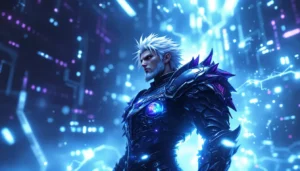
ToggleFirion stands as one of Final Fantasy’s most compelling yet underrated protagonists. Unlike the brooding swordsmen or witty adventurers that became synonymous with the series, Firion emerged from humble, tragic beginnings to lead the Wild Rose Rebellion against the Palamecian Empire. His story in Final Fantasy II (1988) broke the mold for what a Final Fantasy hero could be, a young man thrust into war not by destiny or prophecy, but by circumstance and loss. Decades later, Firion remains relevant across the franchise, appearing in crossovers like Dissidia Final Fantasy and continuing to captivate fans who appreciate his nuanced character arc. Whether you’re revisiting FF2 for the first time or exploring his appearances across the gaming landscape, understanding Firion reveals why this particular Final Fantasy protagonist has endured in gaming history.
Key Takeaways
- Firion from Final Fantasy II stands out as an underrated protagonist who rises from refugee status to revolutionary leader through earned determination rather than destiny or birthright.
- Firion Final Fantasy’s combat system pioneered organic character progression through weapon and magic proficiency based on actual use, a mechanic that anticipated modern skill-based RPGs by decades.
- Unlike chosen-one narratives, Firion’s grounded origin story and willingness to see moral complexity create surprisingly mature characterization that resonates with contemporary audiences seeking authentic motivation.
- Firion’s relevance extends beyond his 1988 debut through appearances in Dissidia Final Fantasy, Final Fantasy XIV collaborations, and modern remakes that introduce him to new gaming generations.
- His flexible, adaptable design—both mechanically and narratively—demonstrates the value of deviation from template-based character archetypes within the Final Fantasy franchise.
Who Is Firion? An Overview of Final Fantasy II’s Protagonist
Firion is the main protagonist of Final Fantasy II, the 1988 sequel to the original Final Fantasy on the NES. Unlike his predecessor, the Warrior of Light from FF1, Firion has a distinct personality and backstory that grounds him in emotional reality rather than abstract heroism.
At the game’s outset, Firion is a young man living in the town of Phin. He’s not a trained soldier or destined warrior, he’s simply a refugee fleeing the Palamecian Empire’s aggression. Alongside his childhood friends Guy and Maria, Firion becomes separated during an Imperial attack, setting him on a path toward rebellion. This origin story is significant because it strips away the fantasy veneer and replaces it with something more human: survival and the desire to protect those he cares about.
What makes Firion distinctive is his lack of predetermined role. He’s not locked into a specific character class, instead, he grows stronger through use, learning new skills and magic organically as he experiences combat. This flexibility mirrors his personal journey from scared youth to capable leader. By the game’s conclusion, Firion has transformed into a legendary hero not through birthright, but through determination and sacrifice.
Firemon’s design reflects his journey. He wears simple armor early on, gradually equipping more imposing gear as he grows stronger. His weapon variety, swords, axes, spears, and even ranged weapons, reinforces the idea that he adapts to challenges rather than conforming to a predetermined archetype. This adaptability is part of what resonates with fans who see themselves in his struggle.
Firion’s Role in Final Fantasy II’s Story
The Wild Rose Rebellion and Firion’s Recruitment
Firemon’s major turning point comes when he joins the Wild Rose Rebellion, an underground resistance movement fighting against Emperor Mateus and his Palamecian Empire. The rebellion recruits him after recognizing his potential and his personal motivation, he has genuine reason to hate the Empire that destroyed his home and separated him from his friends.
Within the rebellion, Firion becomes more than just a soldier. He’s trusted with critical missions that shape the conflict’s trajectory. Leaders like Cid recognize his capability and charisma, gradually elevating him to a position where he carries the hopes of the entire resistance. This isn’t handed to him: it’s earned through action and proven loyalty. The rebellion arc transforms Firion from a desperate survivor into a symbol of hope for all those suffering under Imperial rule.
The Wild Rose serves as Firion’s anchor throughout the narrative. Even when the situation seems hopeless, and Final Fantasy II doesn’t shy away from dark moments, the rebellion reminds him why he fights. This grounding in a tangible cause makes his heroism feel earned rather than imposed.
Key Story Moments and Character Development
Several pivotal moments define Firion’s arc. Early in his journey, he reunites with Maria, one of his childhood friends, who has been working with the rebellion. This reunion is bittersweet: they’re no longer the carefree kids from Phin, but hardened by war. Later, Firion encounters his other childhood friend, Guy, whose story intertwines with major revelations about the Empire’s cruelty.
One of the most defining moments comes when Firion confronts the nature of his quest. Final Fantasy II doesn’t present good and evil as abstract concepts, it shows the real human cost of rebellion. Soldiers are people. Empire subjects are victims, not always villains. Firion’s willingness to see complexity rather than simply destroy anything that opposes him shows his maturity as a character.
The climax forces Firion to face Emperor Mateus directly, but even this confrontation carries emotional weight beyond standard “hero defeats villain” tropes. Firion’s victory is hollow in some respects, it solves the external conflict but doesn’t erase the personal losses he’s endured. This reluctant heroism, this understanding that victory comes at a price, defines Firion’s character in a way that resonates with mature audiences.
Throughout his journey, Firion demonstrates growth not through exposition but through his choices. He becomes a leader because he makes decisions, accepts responsibility, and handles failure with resilience. That’s compelling character development by any standard.
Firion’s Combat Abilities and Skill System
Weapon Proficiencies and Growth Mechanics
Firemon’s combat system in Final Fantasy II is radically different from other Final Fantasy protagonists. Instead of leveling up through experience points in a traditional sense, Firion and his allies grow stronger through repeated use of abilities, a mechanic that predates modern action RPGs by decades.
Weapon proficiency works through practice. The more Firion uses a sword, the better he becomes with swords. Use axes frequently, and his axe proficiency increases. This system rewards player experimentation and creates a tangible feedback loop between gameplay and character growth. Unlike static character builds, Firion’s capabilities reflect how the player actually plays the game.
Key weapon proficiencies include:
• Swords – Firion’s natural starting weapon, offering balanced damage and availability.
• Axes – Slower but powerful, useful for dealing with heavier enemies.
• Spears – Versatile weapons with decent range and damage scaling.
• Bows – Enable ranged combat, essential for managing specific enemy types.
• Martial Arts – Unlocked later, scaling with Firion’s overall physical growth.
This open-ended progression means two players’ versions of Firion can be completely different. One might be a sword master while another specializes in axe combat. The flexibility mirrors Firion’s character, he’s defined by adaptation rather than a predetermined role.
Health and stats also grow through use. Taking damage increases Firion’s max HP, a mechanic that sounds dangerous but creates interesting risk-reward dynamics. Using magic improves his magical stats. This organic growth system, though unconventional by modern standards, creates a uniquely personal investment in Firion’s progression.
Magic and Spellcasting Capabilities
Firemon’s magic system is equally distinctive. Unlike traditional Final Fantasy games where magic is learned from specific spell books, FF2’s magic system requires characters to find and read spell tomes to learn individual spells. Once learned, spells improve through use, scaling in power as Firion casts them repeatedly.
Firemon can access a diverse spell arsenal, including:
• Elemental Magic – Fire, Blizzard, and Thunder spells for dealing direct magical damage.
• Healing Magic – Cure and Raise spells for recovery and resurrection.
• Support Magic – Haste, Slow, and similar effects that manipulate combat pacing.
• Dark Magic – More exotic spells learned later, including powerful offensive options.
A critical aspect of Firion’s magical growth is that spells don’t have traditional MP costs. Instead, casting repeatedly improves spell power and efficiency. This means Firion’s mage capabilities improve through experimentation and consistent use, rewarding players who value magical strategies.
The integration of weapon and magic proficiencies allows Firion to be a generalist or specialist depending on playstyle. Some players make him a sword-wielding physical powerhouse. Others build a balanced warrior who blends weapon attacks with strategic magic use. This flexibility is one of FF2’s most progressive features, and it fundamentally shapes how players experience Firion’s combat identity.
Firion’s Appearances Beyond Final Fantasy II
Dissidia Final Fantasy and Canon Crossovers
Firemon’s relevance extends far beyond his original 1988 debut. His most significant modern appearance comes in Dissidia Final Fantasy (2008, ported to Nintendo Switch and other platforms), a fighting game that brings together protagonists and antagonists from across the entire Final Fantasy franchise.
In Dissidia, Firion is depicted as the warrior of his cycle, competing against other legendary Final Fantasy heroes. The game frames him with dramatic weight, he’s a seasoned fighter with legitimate claim to the title of champion. Unlike some Final Fantasy protagonists who are recontextualized significantly in crossovers, Dissidia honors Firion’s tragic heroism and resilience.
Firemon’s moveset in Dissidia reflects his FF2 abilities. He’s a versatile combatant who can switch between weapon types, maintain ranged offense, and adapt to different situations. His fighting style emphasizes flexibility and positioning, a combat philosophy that’s true to his original character. The inclusion in Dissidia proved that even older Final Fantasy heroes deserved representation among the franchise’s heavy hitters.
Beyond Dissidia, Firion has appeared in various other crossovers like Final Fantasy XIV’s collaboration events, where he’s featured in limited-time content celebrating Final Fantasy II. These appearances remind players that Firion remains part of the active Final Fantasy universe, not relegated to retro-only status.
Other Spin-Offs, Remakes, and Media
Firemon appears in Final Fantasy Trading Card Game expansions, where fans can build competitive decks featuring his iconic moments and abilities. His card art often depicts him at pivotal moments in his story, wielding weapons, casting magic, or leading the Wild Rose Rebellion.
The 2017 remake of Final Fantasy II on mobile platforms (iOS and Android) gives Firion’s story enhanced visuals and quality-of-life improvements while preserving his original character arc. This remake introduces Firion to modern mobile gamers who might never experience the original 1988 version, ensuring his legacy spans multiple gaming generations.
Firemon has also been referenced and honored in Final Fantasy media beyond games. He appears in various Final Fantasy encyclopedias, official guides, and fan communities dedicated to franchise history. While he may not have the mainstream recognition of Cloud Strife or Squall Leonhart, Firion commands respect among Final Fantasy scholars and history-focused fans.
His appearances in Final Fantasy Magic Cards collections and related merchandise demonstrate sustained commercial and fan interest. Unlike many 1980s video game characters who fade into obscurity, Firion has successfully transitioned into modern Final Fantasy culture through thoughtful integration and respectful representation across media.
Why Firion Remains Relevant to Final Fantasy Fans Today
Firion’s enduring appeal stems from several factors that transcend his era. First, his origin story feels surprisingly modern. He’s not a chosen one or destined hero, he’s a refugee forced into conflict by circumstance. In an industry saturated with prophecy-driven narratives, Firion’s grounded struggle resonates with contemporary audiences seeking authentic character motivation.
Second, his mechanical flexibility anticipates contemporary game design. Final Fantasy II’s progression system, where characters grow through action rather than arbitrary leveling, preceded modern skill-based RPGs by decades. This foresight means Firion’s combat identity feels less dated than contemporaries from the same era. When game8.co and similar resource sites discuss RPG progression systems, Final Fantasy II frequently appears as a landmark design that influenced countless modern games.
Third, Firion represents something rare: a thoughtful, nuanced protagonist in an era when many video games defaulted to simple hero archetypes. His willingness to see moral complexity, his reluctant heroism, and his understanding that victory doesn’t erase tragedy, these qualities feel distinctly mature. Modern gamers, many of whom grew up with morally gray narratives, find Firion’s characterization surprisingly sophisticated.
Fourth, the Final Fantasy community has increasingly appreciated franchise history and deep cuts. As twinfinite.net and similar gaming outlets cover Final Fantasy retrospectives, Firion benefits from renewed attention. Younger gamers discovering Final Fantasy SNES: Rediscover the Timeless RPG That Defined an Era often find themselves captivated by FF2 and Firion’s narrative, creating a multi-generational appreciation.
Finally, Firion represents the franchise’s willingness to experiment. Not every Final Fantasy protagonist follows the same template, and Firion stands as proof that deviation creates memorable characters. In contrast to the Final Fantasy Kefka: The Villain Who Redefined Chaos in Gaming History narrative where memorable villains steal scenes, Firion demonstrates that protagonists can be equally compelling through subtlety and earned development rather than bombast.
The gaming industry has matured significantly since 1988, but Firion’s core appeal, authentic struggle, mechanical innovation, and narrative nuance, transcends temporal boundaries. He’s neither overrated nor underrated: he’s simply respected by those who understand what his game accomplished and who his character truly represents.
Conclusion
Firion stands as a crucial figure in Final Fantasy history, representing a moment when the franchise prioritized character depth and mechanical innovation alongside epic storytelling. His journey from refugee to revolutionary leader, combined with FF2’s groundbreaking progression system, created something genuinely special in 1988, and that specialness hasn’t diminished across the decades.
Unlike many protagonists from gaming’s early eras who feel locked in their time period, Firion’s character transcends nostalgia. His story speaks to anyone who values nuanced narratives, his mechanics anticipate modern game design, and his appearances across Final Fantasy media prove he remains actively part of the franchise’s present, not merely its past.
For gamers exploring Final Fantasy’s deep catalog, Firion represents one of gaming’s best-kept secrets, a protagonist whose quiet heroism and reluctant wisdom continue to resonate with players across all skill levels and gaming backgrounds. Whether you’re discovering him for the first time or revisiting his story after years away, understanding Firion means understanding a pivotal moment when video game storytelling reached for something more human and genuinely achieved it.