Table of Contents
ToggleBefore Sephiroth. Before Kefka. Before any of the iconic antagonists that would define the Final Fantasy franchise, there was Garland, a name that struck terror into the hearts of the first Final Fantasy’s protagonists in 1987. Garland might not be the most talked-about villain in gaming today, but his impact on RPG storytelling and villain design runs deeper than most casual fans realize. He wasn’t just a tutorial boss or a forgettable early obstacle: Garland was the architect of a narrative twist that would influence how developers approached story structure for decades to come. This deep dive explores who Garland is, why his reveal still holds up, and how a villain created for an 8-bit game continues to shape the gaming landscape more than three and a half decades later.
Key Takeaways
- Garland from the original Final Fantasy (1987) pioneered the use of narrative misdirection and time-loop storytelling, establishing a blueprint for complex villain design that influences RPG narratives to this day.
- Garland’s shocking revelation as a cosmic force using a bootstrap paradox—where he travels through time to create his own existence—redefined how games approach causality, free will, and player expectations.
- Despite minimal dialogue and sprite-based graphics, Garland’s character design and boss fight mechanics created genuine tension and demonstrated that sophisticated storytelling doesn’t require advanced technology or cinematics.
- Garland’s influence extends far beyond Final Fantasy, shaping how modern RPGs and games across genres approach hidden antagonists, narrative reversals, and thematically resonant villain motivations.
- Modern interpretations of Garland in titles like Dissidia Final Fantasy maintain respect for his historical significance while introducing him to contemporary audiences as a substantive character with unique combat presence.
Who Is Garland? Understanding The Original Antagonist
Garland is the primary antagonist of the original Final Fantasy, though calling him the “main villain” gets complicated once you know the full story. In the opening act, he’s portrayed as a straightforward threat: a dark knight who kidnaps Princess Sarah and kicks off the entire adventure. He’s menacing, powerful, and seems like the obvious final boss that stands between the heroes and peace in their world.
But Garland is more than a simple bad guy. He represents a pivotal moment in gaming narrative, the first time a major RPG used misdirection and the unreliable perception of time as a storytelling device. Square, the developer at the time, wasn’t interested in making Garland a cardboard cutout villain with vague motivations. They crafted someone whose actions make sense within the game’s logic, even if players don’t understand why until the very end.
The design concept reflected the limitations and creativity of the era. With sprite-based graphics and minimal dialogue, Garland had to convey menace through appearance alone: dark armor, an imposing stance, and a positioning that suggested he was a genuine threat to the party. Voice acting was nonexistent: his characterization came entirely from context, placement, and his mechanical role as a boss encounter. Yet somehow, this sparse presentation made him memorable. There’s something about the simplicity that allows imagination to fill the gaps.
Garland’s Role In The Original Final Fantasy (1987)
Design And Character Concept
Garland’s character design was deliberately understated by modern standards, but it worked within the context of 1987 gaming. He wore dark plate armor with a menacing silhouette that immediately communicated “this guy is the bad guy.” There were no elaborate backstories shown upfront, no dramatic cutscenes revealing his motivations. Players only knew what the opening dialogue told them: he’d kidnapped the princess, and he was in the way.
Square’s design philosophy here was economical but effective. In an era where every sprite had to be drawn pixel-by-pixel and memory was measured in kilobytes, Garland’s visual design conveyed maximum threat with minimum resources. His color palette, dark purples, blacks, and silvers, stood out against the brighter backgrounds of the game world. When you first encountered him, there was no confusion about his role.
The character concept also served a practical narrative purpose. A mysterious dark knight was the perfect setup for a shocking revelation later. Players would accept him at face value because the game gave them just enough information to move forward. The minimal characterization wasn’t a limitation: it was a feature that made the twist land harder.
The Iconic Battle And Boss Fight Mechanics
The Garland boss fight is the game’s tutorial encounter disguised as a legitimate threat. He occupies a unique place in Final Fantasy history: he’s the first major boss most players face, yet he’s designed to be challenging without being insurmountable. The battle happens very early in the game, before your party is fully leveled or equipped, which creates genuine tension the first time through.
Mechanically, Garland doesn’t spam special abilities or have gimmicky attack patterns. He hits hard with physical attacks, his primary threat, and has enough HP to require strategy rather than just button-mashing. The fight teaches players the importance of healing, item management, and understanding when to prioritize defense over offense. With modern boss design emphasizing complex mechanics and multiple phases, Garland’s straightforward approach feels almost quaint. But that simplicity was perfect for 1987.
Players first encountering Garland needed to win this fight to progress, yet many remember struggling. This wasn’t bad difficulty curve: it was intentional pacing. The game wanted you to feel like you were facing a real obstacle, someone important enough to have kidnapped a princess. The victory felt earned, which made the emotional payoff of the story’s conclusion hit differently. You’d defeated Garland, or so you thought, and that belief made the real truth all the more impactful when it arrived.
Garland’s Shocking Transformation: Chaos Revealed
The Time Loop Paradox And Narrative Impact
The Garland twist is genuinely one of gaming’s best plot reveals, and it still holds up to scrutiny nearly four decades later. After defeating him, the party believes the threat is over. But then they discover the shocking truth: Garland didn’t die in that first encounter. Instead, he traveled through time, became a being of pure chaos, and was actually pulling the strings of darkness in the past. The four fiends who’ve been plaguing the world? They were all part of Garland’s plan, sent backward in time to create the very darkness that would allow him to exist in the future.
This is a bootstrap paradox, a casual loop where cause and effect fold back on themselves. Garland’s actions in the past create the conditions for his future existence, which in turn enables his past actions. It’s mind-bending stuff, and the game executes it remarkably well given the technical constraints. The reveal forces players to reconsider everything they’ve done. All those boss fights against the four fiends, they were all Garland. The danger was never coming from some external evil force: it was coming from Garland’s temporal manipulation.
What makes this narrative device so effective is that it functions both as a surprise and as a perfectly logical explanation once you know it. Garland’s actions make sense. His motivation, to exist, to perpetuate himself through time, is primal and understandable. He’s not evil for evil’s sake: he’s trapped in a loop and fighting to maintain his existence within it. The fatalism is almost tragic.
How This Twist Influenced Future Final Fantasy Stories
Garland’s revelation opened a door that Square would explore repeatedly throughout the Final Fantasy franchise. The idea that the main antagonist might not be who they seem, or that the true enemy might be something unexpected, became a recurring theme. It didn’t create a formula that games blindly copied: rather, it demonstrated that Final Fantasy’s storytelling could embrace complexity and player manipulation in service of a larger narrative.
Subsequent games experimented with similar ideas: hidden villains, twisted reveals, and questions about the nature of the conflict itself. While games like Final Fantasy VII and VIII would take these concepts in wildly different directions, they share with Garland’s story the willingness to challenge player assumptions. The bootstrap paradox and time manipulation Garland introduced would echo through the franchise, influencing how later stories handled causality and protagonist agency.
Beyond just Final Fantasy, Garland’s twist influenced broader game narrative design. The idea that a boss defeated early on could have a shocking second life or hidden relevance became a template other RPGs would adapt. Gaming storytelling matured partly because early developers like Square showed it was possible to execute complex narrative structures within the technical limitations of the era. Garland proved you didn’t need cinematic presentation or hundreds of lines of dialogue to tell a genuinely surprising story.
Garland Across The Final Fantasy Multiverse: Appearances And Reimaginings
Dissidia Final Fantasy Series
Garland’s most significant modern appearance comes in the Dissidia Final Fantasy series, where he’s reimagined as a major player in an ongoing conflict between Warriors of Chaos and Warriors of Cosmos. Unlike his original Final Fantasy iteration, Dissidia gives Garland proper characterization, dialogue, and context for his existence. He’s no longer a mysterious figure from the past: he’s a present threat with clear motivations and a unique fighting style.
In Dissidia, Garland stands as one of the Chaos side’s most powerful warriors, representing the original Final Fantasy in the game’s multiversal tournament concept. His combat reflects his iconic status: he’s a heavy hitter with moves that reference his original boss fight while incorporating new flashy abilities suited to Dissidia’s faster-paced, three-dimensional combat system. The fight against him feels appropriately climactic, even if it’s just one encounter among many.
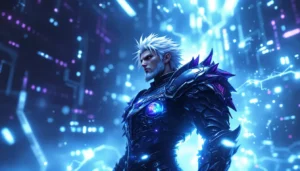
What’s interesting about Dissidia’s portrayal is how it makes Garland relevant to modern audiences without erasing his historical importance. Fans who’ve never played the original Final Fantasy can appreciate him as a substantial fighter with actual personality. Meanwhile, series veterans recognize the callbacks and enjoy seeing how the developers modernized his aesthetic and moveset. He’s got a ridiculous mane of blonde hair that dominates the screen during his attacks, trading the simplicity of original sprite work for a design that screams “final boss energy.”
Other Cameos And Crossover References
Beyond Dissidia, Garland appears in various Final Fantasy crossovers and celebrations of the franchise’s history. He’s shown up in Dissidia’s sequel and spin-offs, various mobile games that celebrate Final Fantasy’s legacy, and in discussions of gaming history whenever outlets retrospectively cover the original Final Fantasy’s narrative structure.
His appearances in these properties tend to position him as what he is: a piece of gaming history. Sometimes he’s just a reference, a nod to longtime fans. Other times he’s a substantive encounter. But across all of them, there’s an understanding that Garland represents something important. He’s not treated as a joke or a relic: he’s recognized as an influential antagonist whose impact extends far beyond his original game.
What separates Garland from other early Final Fantasy villains in terms of multiverse presence is his narrative significance. He was the first villain in the first Final Fantasy, and that historical weight matters. Developers and fans both recognize that his story set a precedent. When Garland appears in modern games, it’s with respect for what he represented.
Combat Strategy: How To Defeat Garland In Modern Games
Original Game Tactics And Weaknesses
Defeating Garland in the original Final Fantasy requires understanding the game’s mechanics and managing limited resources. Your party at that point is low-level, poorly equipped, and might not even have healing spells yet depending on your class distribution. The fight is winnable but demands actual strategy rather than mindless attacks.
The primary weakness you exploit is Garland’s dependence on physical attacks. He doesn’t have special abilities or magic to worry about, he just hits hard with his sword. This means your approach should focus on survival and chip damage. Keep your HP topped off constantly: letting anyone drop below half health is a mistake because he can finish them in one or two hits.
Your healing capabilities are crucial. If you’ve got a White Mage, their Cure spell becomes your lifeline. Someone should be healing every other turn while the rest of the party attacks. Damage output matters less than attrition: you need to outlast Garland, not overpower him. Items like Potions and Phoenix Downs aren’t luxuries in this fight, they’re survival tools.
If you’ve got Magic users with offensive spells, they’re less reliable against Garland due to his physical durability, but Fire or other direct damage spells still contribute. Positioning your party to maximize offense while guaranteeing survival creates the optimal strategy. It’s not flashy, but it works.
Updated Strategies For Remasters And Remakes
The original Final Fantasy has been ported and remade multiple times across different platforms. The iOS and Android versions, various console remasters, and the Final Fantasy I & II Origins collection all feature updated graphics and sometimes rebalanced mechanics. Garland fights in these versions tend to be slightly more generous than the original NES version, though the core strategy remains the same.
In the mobile and remastered versions, you typically have better access to healing items and might reach the fight slightly better equipped. The updated UI also makes status management clearer, reducing some of the difficulty that came from unclear information in the original. These versions acknowledge that modern players expect slightly more forgiving balance while maintaining the fight’s challenge.
The Dissidia interpretation of Garland, meanwhile, is a completely different beast mechanically. He’s a competent fighter with genuine combos and special abilities in that game’s 3D fighting system. Strategies there revolve around understanding his attack patterns, managing your HP with Brave/HP damage systems, and knowing when to go offensive versus defensive. Detailed tier lists and strategy guides on platforms like Game8 and Twinfinite break down Dissidia matchups if you’re tackling him there.
Regardless of version, Garland respects the same basic principle: he’s a skill check before a story beat. Beating him rewards you with progression and sets up the emotional punch of the twist later. That design principle has survived every remaster and modernization.
Garland’s Influence On Villain Design In Gaming
Garland’s impact on how games design villains extends far beyond Final Fantasy. He demonstrated several principles that became foundational to RPG storytelling: the importance of player manipulation, the power of narrative misdirection, and the idea that a villain’s motivations can be fundamentally tied to time, causality, and fate itself.
Before Garland, many RPG antagonists were simply obstacles, powerful enemies with minimal characterization beyond their role as the opposition. Garland showed that a villain could be far more interesting if players’ understanding of them shifted as the story progressed. You initially fought him as a dark knight. By the end, you understood he was a cosmic force trying to perpetuate his own existence across time. The same character, but radically different in scope and meaning once context changed.
This principle influenced countless games that followed. The idea of “the real enemy is someone else” or “the enemy’s motivations are more complex than they initially appeared” became recurring themes in RPGs and beyond. Developers learned they could subvert expectations if they laid proper groundwork. Garland proved it could be done on modest technical budgets without feeling cheap or unearned.
The bootstrap paradox Garland represents also opened storytelling doors. Time travel, causality loops, and questions about free will versus predetermined fate became viable themes for game narratives. Garland wasn’t the first time travel story in games, but he was arguably the first to use it as a core narrative device that recontextualized the entire conflict. The influence is visible in games that embrace temporal paradoxes and cyclic narratives as fundamental to their stories.
Modern villainy in games often incorporates elements Garland pioneered. Whether it’s hidden motivations, layer-by-layer reveals, or villains who’ve technically been present throughout the story in disguise, you can trace these tropes back to the original Final Fantasy. Garland didn’t invent these ideas wholesale, but he demonstrated their power in an interactive medium and showed subsequent developers they were worth exploring.
Legacy And Cultural Impact On The RPG Genre
When you examine the RPG genre’s evolution from the 1980s onward, Garland occupies an underrated but significant position. The original Final Fantasy wasn’t the first RPG, but it was the game that proved Japanese RPGs could compete globally and tell complex stories at the same technical fidelity as Western alternatives. Garland, as the game’s central narrative focal point, contributed to establishing what a Final Fantasy villain should be: someone with genuine presence and surprising depth.
The character became synonymous with a specific narrative philosophy: the importance of misdirection, the layering of information, and the revelation of hidden truth as a powerful storytelling tool. Subsequent Final Fantasy villains built on what Garland established, taking those principles in new directions but fundamentally respecting the template he created. When players think of Final Fantasy antagonists, they might lead with Sephiroth or Kefka, but Garland sits in the conversation as the one who started it.
Within gaming communities, Garland represents something important about how early games told sophisticated stories even though technical limitations. He’s referenced whenever developers discuss narrative design in resource-constrained environments. Speed runners and completionists return to the original Final Fantasy partly because they want to experience that twist themselves. Gaming historians point to him as evidence that the medium was capable of genuine narrative complexity from its earliest days.
The fact that Garland remains relevant in discussions of villain design decades later speaks to the durability of his conception. He’s not a character that’s been forgotten and occasionally remembered: he’s regularly referenced when examining what makes a great antagonist. Modern games with complex villains and narrative reversals benefit from the template Garland helped establish. His influence on the genre is woven into the DNA of contemporary RPG storytelling.
Examining games across platforms from GamesRadar+ to fan communities reveals consistent appreciation for Garland as an important figure in gaming history. He’s not as immediately iconic as characters from later entries in the franchise, but his conceptual importance and narrative innovation mean he retains cultural cachet among both casual gamers and serious enthusiasts. The fact that developers still include him in modern Final Fantasy projects suggests they understand his significance.
Garland’s legacy is eventually about proving that games could tell stories that respected their audience’s intelligence. A villain created in 1987 using a handful of pixels and minimal dialogue became a touchstone for how antagonists could be complex, surprising, and thematically resonant. That’s an achievement that transcends the specific technology of the era. It’s about understanding narrative fundamentals and executing them with precision. In that sense, Garland’s impact has only grown as gaming’s storytelling sophistication increased. He established a high bar, and the industry has been respecting that standard ever since.
For those interested in exploring Final Fantasy’s evolution, the Final Fantasy SNES: Rediscover offers deeper context into how the franchise developed after the original. Also, exploring the broader Final Fantasy Archives provides comprehensive coverage of the series’ history and how characters like Garland fit into the larger narrative tapestry.
Conclusion
Garland stands as proof that remarkable storytelling doesn’t require cutting-edge technology, elaborate cinematics, or unlimited development resources. A game developer in 1987 created a villain whose narrative structure and thematic resonance still influences how games approach antagonists today. He was simultaneously a straightforward threat in a kidnapping plot and a cosmic force bent on temporal paradox, and the game made both versions of him believable.
What made Garland endure isn’t just nostalgia or historical significance. His story is genuinely well-crafted. The revelation that he was manipulating events from the future, creating the conditions for his own existence, raises genuine questions about fate and free will that remain philosophically interesting decades later. When players defeat Chaos at the end of Final Fantasy, they’re not just saving their world: they’re breaking a cycle that Garland trapped himself in. There’s tragedy in that.
The character represents a moment when gaming was proving it could achieve narrative complexity comparable to literature and film. Garland was the first true test of that capability in the most commercially successful Japanese RPG franchise, and he passed with flying colors. Every villain that followed, in Final Fantasy and throughout the broader gaming landscape, exists in a world where Garland demonstrated what was possible.
For modern gamers experiencing the original Final Fantasy through remasters or emulation, Garland remains a satisfying antagonist. For longtime series fans, he’s a reminder of where it all began. And for developers, he’s a case study in how smart narrative design creates impact that technology alone cannot. In 35+ years, that’s proven to be his most powerful legacy.