Table of Contents
ToggleFinal Fantasy IV gave us many things, a legendary soundtrack, memorable character arcs, and one of gaming’s most compelling antagonists. Golbez stands as a towering figure in the franchise’s rogues’ gallery, a villain whose design, motivations, and eventual redemption arc set the template for how Final Fantasy would approach character complexity. Whether you’re discovering him for the first time or revisiting this classic through modern remakes, understanding Golbez is essential to appreciating why Final Fantasy IV remains one of the series’ strongest entries nearly 40 years after its original release on the SNES.
Key Takeaways
- Golbez stands as one of Final Fantasy IV’s most memorable antagonists due to his complex characterization, dark armor design, and sophisticated narrative arc that transcends typical video game villain tropes.
- The revelation that Golbez is possessed by the alien entity Zemus transforms him from a one-dimensional evil overlord into a tragic figure caught between his own will and cosmic manipulation, establishing the game’s central theme of reclaiming agency.
- Golbez’s combat encounters escalate in difficulty and complexity throughout Final Fantasy IV, requiring players to employ genuine strategy rather than simply out-leveling enemies, with signature abilities like Flare Star and mind control mechanics that create both tactical and psychological challenges.
- His redemption arc, where Golbez regains control of his actions and fights alongside the party against Zemus, sets a template for how subsequent Final Fantasy titles approach complex antagonist development and moral ambiguity.
- Golbez’s enduring legacy appears across multiple platforms and spin-offs, from Dissidia: Final Fantasy to modern remakes, proving his character design and writing remain relevant to contemporary audiences nearly 40 years after his original 1991 SNES release.
Who Is Golbez? Understanding Final Fantasy IV’s Most Memorable Antagonist
Golbez isn’t just another video game villain, he’s the face of Final Fantasy IV’s entire conflict, a figure whose presence dominates the narrative from beginning to end. He’s a sorcerer of immense power, draped in dark armor and commanding forces that shake the world. But what makes him truly memorable is the mystery surrounding him: his motivations, his relationship to the protagonist, and the secrets he holds that fundamentally alter the story’s direction.
For players experiencing the game for the first time, Golbez embodies the archetype of the unstoppable dark overlord. He commands respect through sheer magical prowess, yet the writers never let him become one-dimensional. Every appearance peels back another layer, making him less a caricature of evil and more a tragic figure caught between forces beyond his control.
Character Origins and Background
Golbez wasn’t born in darkness. He’s actually Cecilia’s older brother, a revelation that fundamentally reshapes how players understand him. His journey to becoming the world’s most feared sorcerer begins with a supernatural encounter: he’s possessed and controlled by Zemus, a powerful Lunarian alien whose consciousness influences Golbez from the shadows.
This possession is the crux of Golbez’s character. For much of Final Fantasy IV, he’s not entirely acting of his own will. His cruelty, his betrayals, his relentless pursuit of the elemental crystals, all of it stems from Zemus’s manipulation. Golbez retains his memories and personality, but his actions are filtered through an alien consciousness that has its own agenda for the world. This setup creates a protagonist’s dilemma: how do you defeat someone who’s simultaneously guilty and an unwilling victim?
The original SNES version established this foundation, though later remakes like Final Fantasy IV: The Complete Collection for PSP expanded the context significantly. Understanding his background matters because it informs every decision he makes and every confrontation he triggers throughout the game.
Golbez’s Role in the Final Fantasy IV Storyline
Golbez shapes the narrative arc of Final Fantasy IV in ways that few antagonists manage. His actions drive Cecil and the party forward, his manipulations create moral dilemmas, and his presence feels genuine, not like a pre-written obstacle but like an actual threat responding to the party’s advances.
The Red Wings and Early Conflicts
Golbez’s first major act is commanding the Red Wings, the airship fleet of Baron. This isn’t subtle villainy, it’s a military conquest. Players begin the game piloting the Red Wings themselves under the assumption they serve a righteous king. The shocking revelation that the Red Wings are instruments of destruction, commanded by Golbez for purposes of crystal-collecting, establishes him as both a genuine military threat and a manipulator of institutions.
The Red Wings massacres shape the entire game’s moral landscape. They attack Mist, destroying an entire town and its people. This isn’t portrayed with modern cinematic flair: it’s presented with the stark weight that the SNES’s technical limitations somehow emphasize. The narrative takes players from following orders as “heroes” to discovering they’ve been complicit in atrocities. Golbez orchestrated this, and his role as the hidden puppet master creates a profound sense of betrayal.
This section establishes the central conflict: the party isn’t fighting a distant, abstract evil. They’re fighting someone actively reshaping the world through superior magical power and institutional control.
The Moon and Zemus’s Influence
As the game progresses, Golbez’s true nature becomes increasingly apparent. He’s not simply ambitious, he’s being driven toward a singular goal: collecting the elemental crystals and journeying to the Moon. The reason becomes clear when players learn of Zemus, the Lunarian entity controlling Golbez from across the cosmos.
Zemus’s plan uses Golbez as the primary executor. The crystals serve as conduits, and their collection represents the first step toward allowing Zemus to manifest more fully on the world’s surface. Golbez himself isn’t entirely ignorant of this control, which makes his character more tragic. He experiences moments of clarity where his own will conflicts with Zemus’s commands, creating internal struggle that players witness.
The Moon itself becomes Golbez’s domain by the game’s final third. He establishes a physical presence there, commanding forces and preparing for the final confrontation. This escalation, from commanding earthly airships to governing an extraterrestrial base, demonstrates how the threat grows as players’ power increases. Final Fantasy SNES: Rediscover the game that established these conventions, and you’ll see how innovative Golbez’s role-playing truly was for 1991.
Golbez’s Powers and Abilities Explained
Golbez doesn’t command respect through personality alone, his combat capabilities are legitimately terrifying. Understanding his arsenal is essential to appreciating why defeating him represents a genuine achievement, not a scripted plot beat.
Black Magic Mastery and Dark Powers
Golbez’s signature ability is his mastery of black magic. His spell repertoire extends beyond what most characters can achieve, including high-tier spells like Meteor, Flare, and Berserk. In boss encounters, he combines these with dark-flavored abilities that emphasize his connection to Zemus’s alien influence.
What distinguishes Golbez’s magic usage is its precision. He doesn’t spam spells indiscriminately. Instead, his attacks target specific party members based on their vulnerabilities, and he adapts his strategy based on party composition. This tactical approach makes him feel less like a damage-dealing machine and more like a cunning adversary.
Beyond traditional black magic, Golbez also channels darker, more esoteric powers. His Control ability exemplifies this, he can seize control of party members’ minds, forcing them to attack allies. This ability adds a psychological dimension to battles against him. Players must manage not just healing and offense but the threat of losing control of their own characters.
His Flare Star attack represents the culmination of his power, a massive dark energy blast that combines physical and magical elements. In the original SNES version, this attack deals significant damage (approximately 700-800 HP on a standard playthrough). In remakes and subsequent appearances, the damage scales, but the threat level remains constant: Flare Star demands respect and preparation.
Boss Encounters and Battle Mechanics
Golbez features in multiple boss encounters throughout Final Fantasy IV, each escalating in difficulty and complexity. His first encounter occurs relatively early when the party barely has adequate equipment and abilities. This encounter serves as an introduction to his power and establishes him as a genuine threat rather than an inevitable victory.
The subsequent encounters grow more intense. By the Moon dungeons, Golbez is depicted as fighting at near-full power, unburdened by the need to appear subtle. Players familiar with Final Fantasy game design across multiple platforms, whether on the original SNES, Final Fantasy GBA: Unforgettable Adventures in Portable Gaming or the PSP’s Complete Collection, will notice how the developers balanced his strength across different hardware versions while maintaining his threatening presence.
Key fight mechanics include:
- HP scaling: Golbez’s health pool increases across encounters, requiring stronger party composition and equipment
- Ability rotation: He cycles between offensive spells, status effects, and mind control abilities
- Weakness exploitation: While not explicitly stated in-game, players discover through experimentation that certain damage types are more effective
- Phase transitions: At certain health thresholds, Golbez shifts his attack pattern or summons allies
The difficulty curve ensures that players can’t simply out-level their way to victory. Facing Golbez requires actual strategy, proper character builds, and often multiple attempts. This creates genuine tension and makes victory feel earned rather than inevitable.
The Redemption Arc: Golbez’s Character Development
What separates Golbez from countless other video game villains is his character arc. He isn’t defeated and left in the dust. Instead, his story continues, fundamentally altering player perception of what he represents and what his ultimate purpose becomes.
From Enemy to Ally: A Shocking Revelation
After multiple confrontations and a journey to the Moon itself, players finally break through Zemus’s control. Golbez, freed from the alien consciousness dominating his actions, regains agency over his own life. This moment is pivotal, the villain becomes something else entirely.
Golbez’s transformation isn’t portrayed as instant redemption or a magical personality shift. Instead, the writers present it as a man reclaiming his stolen agency. He spent so long under another’s control that rediscovering his own will becomes an act of rebellion against the very cosmic force that created him.
His assistance against Zemus represents the final step in his journey. He fights alongside the party against the entity that manipulated him, using his considerable power for a purpose of his own choosing. This isn’t forgiveness granted by the narrative or redemption bought through sacrifice, it’s simply a man deciding to act on his own volition, and that decision aligning with what the party needs.
Various remakes handle this moment differently. The PSP’s Final Fantasy IV: The Complete Collection includes additional dialogue and scenes that deepen Golbez’s internal struggle. Other ports and remakes maintain the core revelation while adjusting the pacing and emotional weight. Regardless of platform, the fundamental truth remains: Golbez’s redemption is earned through the revelation of his true nature and the reclamation of his choice.
Impact on Other Characters and the Narrative
Golbez’s redemption arc affects not just the central narrative but the entire cast. Cecilia, his younger sister, must reconcile the villain who terrorized her world with the brother she never knew. This relationship carries weight beyond simple exposition, it forces the narrative to explore what responsibility looks like when you’ve been used as an instrument against your will.
The party’s perception shifts as well. They transition from viewing Golbez as an evil mastermind to understanding him as a victim of circumstance. This moral complexity elevates Final Fantasy IV beyond straightforward good-versus-evil storytelling. Gaming news from across platforms often highlights this aspect of IV as one of the earliest examples of nuanced antagonist development in JRPG storytelling.
Also, Golbez’s struggle against Zemus’s control establishes a thematic foundation for the entire game. The story isn’t eventually about a villain conquering the world, it’s about people reclaiming their agency from forces seeking to control them. Golbez, even though his status as the primary antagonist for most of the game, embodies this theme more completely than any other character.
Golbez Across Final Fantasy Spin-Offs and Appearances
Golbez’s popularity ensured he didn’t remain confined to Final Fantasy IV. His appearances in spin-offs and crossover titles demonstrate the depth Square Enix believes his character possesses and the affection the fanbase maintains for him.
Dissidia and Other Crossover Titles
Dissidia: Final Fantasy featured Golbez as a playable character, giving him prominence in a game designed around final fantasy antagonists. His fighting style emphasizes dark magic and control-based abilities, translating his narrative role into actual combat mechanics. Players fighting as Golbez experience his character through gameplay rather than cutscenes, adding another dimension to understanding him.
In Dissidia, Golbez isn’t presented as evil, he’s presented as a warrior fighting for his own reasons, his own perspective on the conflict between Cosmos and Chaos. This presentation acknowledges what fans understood: Golbez is complex, not simply malevolent. The game’s narrative framework allows multiple characters to exist simultaneously, so Golbez can be portrayed as both the villain from IV’s perspective and as someone with legitimate motivations from his own viewpoint.
Other appearances include cameos in Dissidia sequels, Final Fantasy XV’s content updates (which featured various Final Fantasy characters), and persistent references across the Final Fantasy franchise. Game Rant’s coverage of Final Fantasy spin-offs often highlights Golbez’s continued prominence in these titles, noting how consistently he ranks among fan-favorite antagonist characters.
Each appearance reinforces a consistent characterization: Golbez is dangerous, intelligent, and complex. He’s not a one-note villain, and spin-off appearances celebrate this nuance.
Legacy in Modern Final Fantasy Media
The 2023 mainline Final Fantasy XVI made significant departures from traditional Final Fantasy formula, yet the influence of character archetypes like Golbez remained visible. Modern developers understand the template he established, the antagonist who challenges not just through power but through forcing the protagonist to confront uncomfortable moral questions.
Final Fantasy VII Remake’s antagonists, Sephiroth and others, carry echoes of Golbez’s complex motivation structure. The idea that villains might be victims of circumstance, manipulated by greater forces, or victims of their own power, these concepts crystallized around Golbez and propagated through subsequent Final Fantasy titles.
In retrospective discussions of Final Fantasy’s antagonist roster, discussions that appear across gaming media and analysis platforms, Golbez consistently ranks as one of the franchise’s most significant villains. This isn’t nostalgia: it’s recognition that the character embodies sophisticated narrative design that holds up against modern storytelling standards.
Remakes have also kept Golbez relevant. The PSP’s Complete Collection and later ports and remakes of Final Fantasy IV ensure each new generation of players encounters him with potentially improved visuals, expanded dialogue, and modernized mechanics. These remakes don’t fundamentally alter his character, they honor the original vision while making it accessible to contemporary audiences. Final Fantasy Magic Cards and other media celebrate the magic system that Golbez embodies and exemplifies throughout the series.
Why Golbez Remains a Fan Favorite and Cultural Icon
Golbez’s enduring popularity stems from several converging factors: exceptional character design, sophisticated narrative writing, and cultural timing that allowed him to establish templates later games would follow.
Design, Writing, and Timeless Appeal
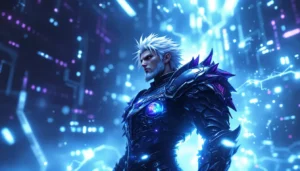
Visually, Golbez is instantly recognizable. His dark armor, his distinctive silhouette, his commanding presence, these elements were designed to impress even on SNES hardware with its technical limitations. Sprite artists created a character whose imposing nature comes through even though the pixelated medium. This achievement shouldn’t be understated: creating a visually memorable villain on the SNES required exceptional artistic direction.
The writing matches the visual design. Golbez speaks with authority and intelligence. His dialogue conveys his power without resorting to excessive explanation. When he explains his motivations or acknowledges the party’s strength, the writing feels genuine, not condescending or artificially dramatic. This consistency between character and presentation creates authenticity that persists across multiple playthroughs and generations.
What makes Golbez timeless is his thematic relevance. He represents loss of agency, the struggle against forces beyond individual control, and the path toward reclaiming one’s own will. These themes remain resonant because they reflect universal human concerns. A teenager experiencing their first playthrough and a player returning to the game decades later both recognize something true in Golbez’s journey.
Also, Golbez succeeded where many antagonists fail: he remains threatening and impressive while simultaneously becoming sympathetic. Players never completely hate him because the narrative always hints that something larger is at work. Once that larger truth is revealed, everything recontextualizes. This narrative trick, misdirection combined with legitimate character depth, remains a masterclass in video game storytelling.
His design philosophy influenced how later games approached villain design. Developers recognized that antagonists could be complex without sacrificing threat level. Golbez proved that a character could inspire both fear and compassion, often simultaneously. This lesson echoed through Final Fantasy’s subsequent antagonist-focused narratives.
Fans celebrate Golbez not because nostalgia blinds them to his flaws, the game itself is dated by modern standards, but because the character transcends those limitations. He’s well-written, well-designed, and narratively significant in ways that few 1991 video game characters achieved. That achievement persists, making him as relevant in 2026 as he was upon release. Explore other iconic Final to understand how character depth became foundational to the franchise’s identity, an identity Golbez helped establish. Discover more Final Fantasy content across multiple eras and platforms to fully appreciate the character’s lasting impact on game narrative design.
Conclusion
Golbez stands as more than just Final Fantasy IV’s primary antagonist, he’s a case study in how video game narrative design can create memorable, complex characters within technical constraints. His journey from mysterious villain to tragic figure and eventual ally demonstrates sophistication that the industry wouldn’t consistently achieve for years afterward.
What makes Golbez extraordinary is his continued relevance. Players discovering him for the first time through modern remakes or emulation understand his power and complexity as readily as those who experienced the original 1991 SNES release. The character’s design, writing, and narrative arc transcend the specific era of his creation.
For anyone interested in understanding how Final Fantasy established itself as a narrative-driven franchise, Golbez is essential. His character illustrates the series’ commitment to antagonists as fully realized characters rather than obstacles. In an industry sometimes criticized for shallow storytelling, Golbez represents a commitment to depth that remains admirable decades later. Whether experiencing him as a fearsome opponent or as a sympathetic figure caught between forces beyond his control, encountering Golbez means encountering one of gaming’s most significant and well-crafted antagonists.